









For most people, brushing their teeth is a matter of course in everyday life – in the morning after getting up, in the evening before going to bed. And yet, for many, a problem remains that is particularly sensitive: bad breath. Even those who brush their teeth regularly, thoroughly and with a clear conscience sometimes find: Their breath is not as fresh as it should be.
Bad breath – medically known as halitosis – affects more people than one might think. In public, it is a taboo subject; in private, a quiet but constant source of insecurity. Those who suffer from persistently bad breath often feel inhibited: in conversations, when smiling, when close to others. And not infrequently, self-confidence also suffers as a result.
In over 80 percent of cases, the cause is not a lack of hygiene or neglect – but rather in hidden areas of the oral cavity that are difficult to reach with conventional dental care. Tongue coatings, bacterial deposits in gum pockets, tonsil stones or disturbed salivary flow – all of these can prevent breath from staying fresh despite the best care.
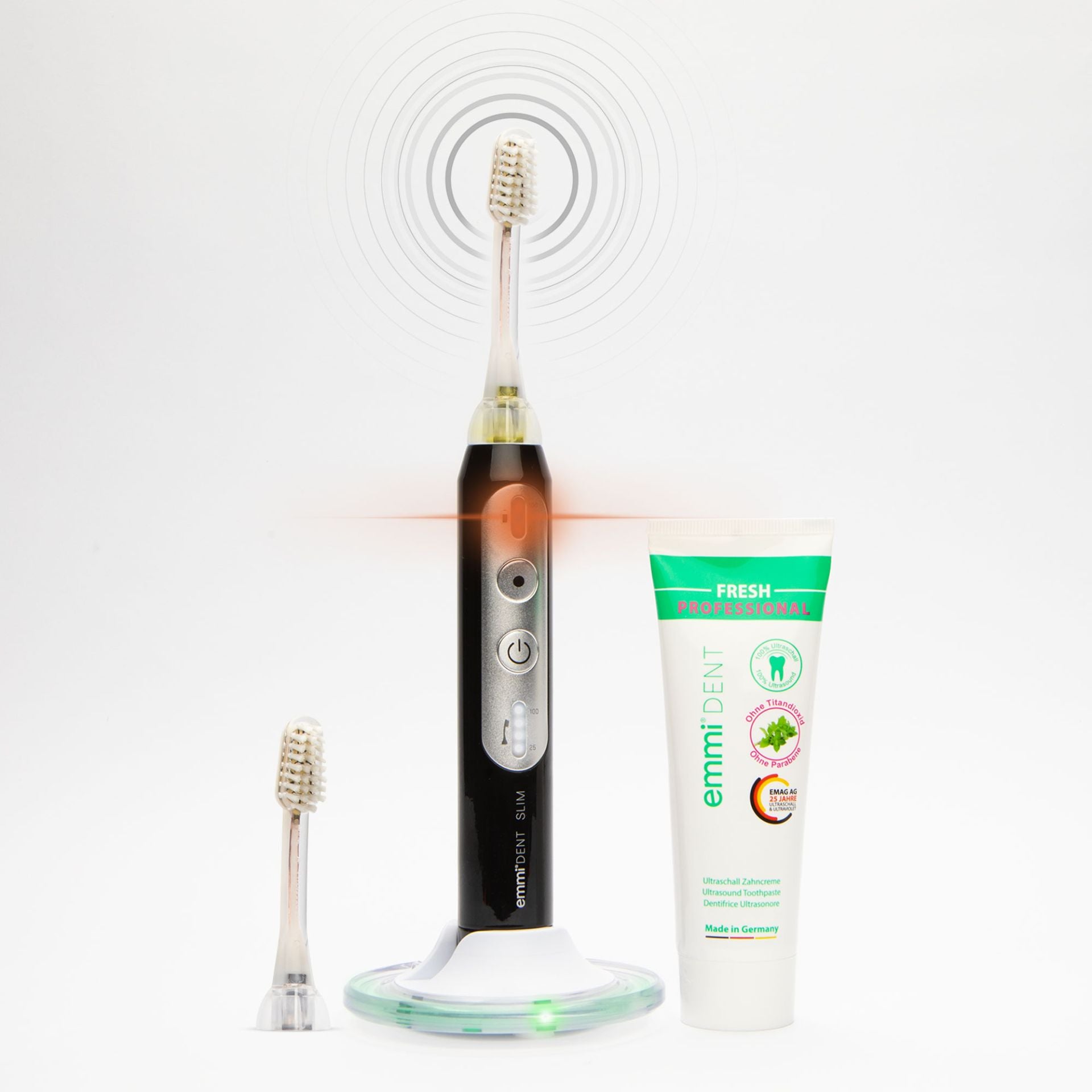
The good news: With targeted attention, sound knowledge – and the right technology – this can be changed sustainably. In this article, we show you where the invisible causes of bad breath really lie – and how you can finally ensure a good feeling when breathing, speaking and smiling with the modern emmi-dent Slim ultrasonic toothbrush.
Not all bad breath is the same
A hint of garlic from a favorite meal, a glass of red wine in the evening or simply morning breath – all of these can temporarily cause an unpleasant odor in the mouth. But this is completely normal and usually harmless. Temporary bad breath can usually be eliminated quickly and easily with a mouthwash, sugar-free chewing gum or the next tooth brushing.
However, the situation is quite different with persistent or recurring bad breath that cannot be completely eliminated even with regular brushing. Here, experts speak of halitosis – a condition that affects far more people than is generally assumed. Studies show that up to a third of the population suffers from chronic bad breath at some point in their lives.
The causes are usually not a lack of hygiene, but rather microscopic bacteria that find ideal living conditions in certain areas of the oral cavity. They break down proteins from saliva, food debris and dead cells – and in doing so produce so-called volatile sulfur compounds (VSCs), which cause the characteristic unpleasant odor.
Particularly insidious: These bacterial colonies preferentially settle where conventional toothbrushes can barely reach – deep in the tongue furrows, in gum pockets, on the tonsils or on rough denture surfaces. Even thorough brushing can only reach them superficially, while the actual source of the bad breath remains.
To permanently combat halitosis, therefore, more is needed than toothpaste with a fresh taste: it requires targeted, gentle deep cleaning – for example, with real ultrasound technology, as made possible by our emmi-dent Slim ultrasonic toothbrush.
The most common causes – and why they are so easily overlooked
Many people are surprised when unpleasant bad breath persists despite thorough brushing. But the answer often lies where one does not immediately look: away from the tooth surfaces. The oral cavity is complex – and many odor-forming processes take place in areas that are difficult or impossible to reach with a toothbrush. The following causes are particularly common – but also frequently overlooked.
1. Tongue coating – the forgotten bacteria carrier
The tongue is the largest organ in the oral cavity – and a true playground for odor-causing bacteria. Between the countless small papillae on its surface, food debris, dead cells and microorganisms accumulate daily, forming a dense coating. This often appears whitish or yellowish – and yet remains unnoticed because we do not perceive it directly when brushing.
The problem: This tongue coating is not only unsightly, but can release intensely smelling sulfur compounds that toothpaste alone cannot neutralize.
Tip: Integrate tongue cleaning into your daily routine. A tongue cleaner attachment reliably removes coatings. Particularly effective: the ultrasonic function directly on the tongue – gentle, painless and deep-acting.
2. Tonsil stones – small deposits with a big impact
Anyone suffering from stubborn bad breath, even though their teeth and tongue are sparkling clean, should take a look at their palatine tonsils. There, in small crypts and furrows, tonsil stones (also called tonsilloliths) can form – tiny, whitish-yellow nodules consisting of a mixture of saliva, shed cells, food debris and bacteria.
They often go unnoticed – until they become noticeable due to their intense, foul odor. Even the smallest tonsil stones can cause severe bad breath.
Note: Individual stones can usually be gently squeezed out or dissolve during gargling. However, if they occur more frequently or if there are deeper deposits, an ENT examination is advisable – especially if bad breath persists despite consistent care.
3. Dry mouth – when saliva is missing
Saliva is the silent hero of our oral health. It washes away food debris, neutralizes acids and keeps the mucous membranes supple. However, with increasing age, certain medications or even stress, reduced saliva production (xerostomia) can occur. And this precisely favors bad breath: Because where there is no natural rinsing, bacteria and plaque can spread undisturbed.
This problem occurs particularly frequently at night – many people wake up with an unpleasant taste or dry mouth feeling.
What helps:
- Drink regularly and sufficiently (preferably still water)
- Promote chewing – e.g. with sugar-free chewing gum or dental care chewing gum
- Use of alcohol-free mouthwashes that do not dry out the mucous membranes
- Particularly gentle dental care that does not irritate the sensitive oral flora – such as emmi-dent ultrasound technology
4. Stomach and digestion – when the origin lies deeper
Even though the majority of all cases are rooted in the oral cavity itself, another area must not be disregarded: the digestive system. Because in some cases, bad breath has nothing to do with insufficient oral hygiene – but is a symptom of an internal cause.
Possible triggers:
- Reflux disease (heartburn): Rising stomach acid can reach the pharynx via the esophagus and lead to unpleasant odors there.
- Helicobacter pylori: This stomach bacterium is suspected of causing bad breath in addition to stomach problems.
- Liver or kidney problems: In very rare cases, a "faint" or "urinary" breath can be an indication of a deeper metabolic problem.
Important: If bad breath persists despite careful dental care, tongue cleaning and mouthwash – especially in combination with symptoms such as bloating, nausea, dry cough or general malaise – you should consider a medical examination. Because only those who know the cause can act specifically.
What you can concretely do – immediate help & daily routine
1. Professional dental cleaning 2x a year
Even with the best home care, plaque can accumulate in the interdental spaces or at the gum line. Have it removed regularly – especially if you are prone to bad breath.
2. Use the right toothbrush – without friction, without risk
The emmi-dent Slim is the ideal toothbrush for halitosis – because it works:
- almost contact-free
- thoroughly in the gum pockets
- particularly gently in case of irritation or inflammation
The resulting micro-bubbles penetrate even hard-to-reach areas – such as between teeth, on the palate or in the crevices of the tongue. Bacteria that produce foul-smelling sulfur compounds are specifically eliminated – without mechanical pressure.
3. Tongue scraper & ultrasound – unbeatable duo
Combine daily tooth cleaning with targeted tongue care. Once a day is enough – and you will feel the difference.
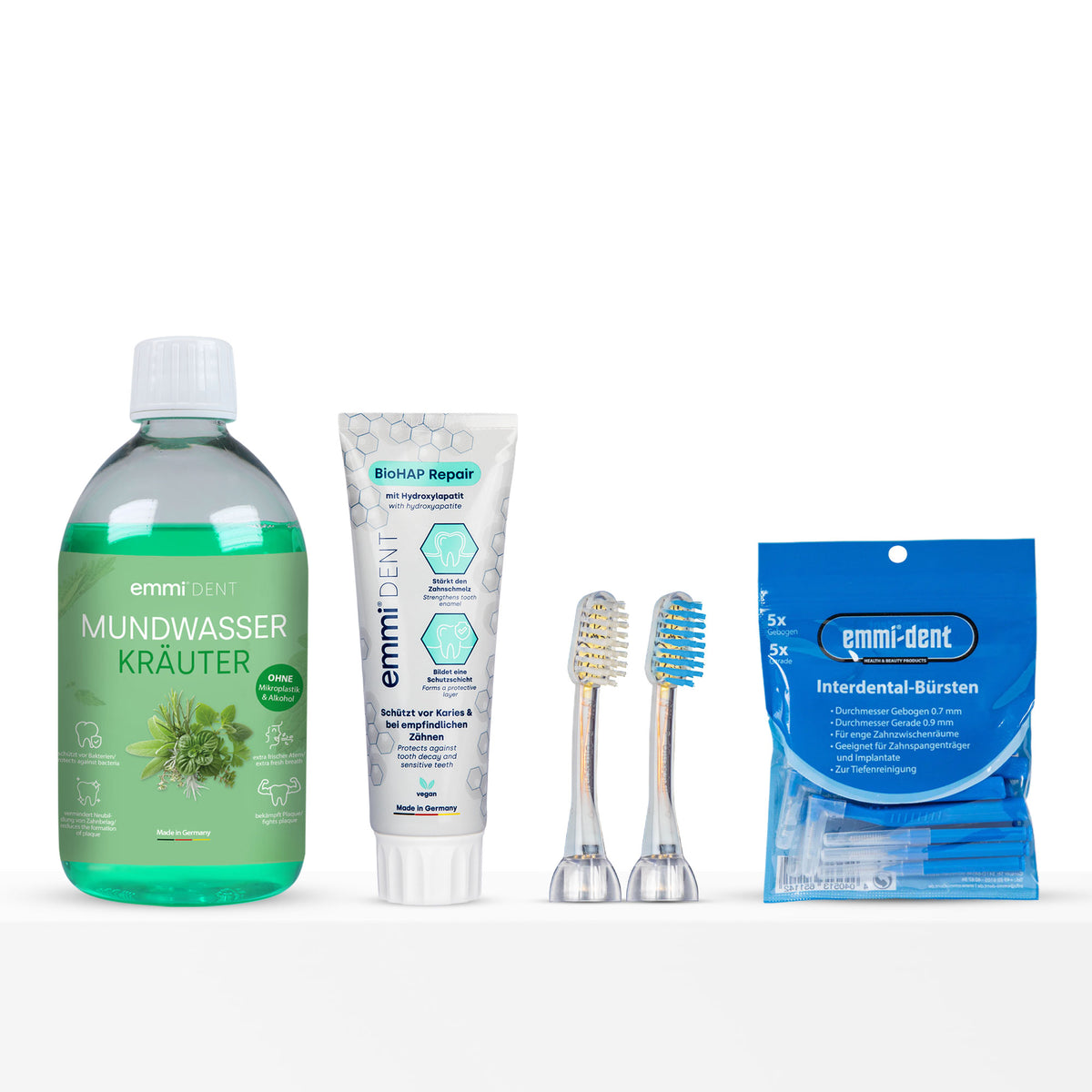
4. Alcohol-free mouthwash – for more freshness
Many commercially available mouthwashes contain alcohol – which has an antibacterial effect, but dries out the mucous membranes. Better: alcohol-free variants with chlorhexidine or essential oils, which have an antibacterial effect and simultaneously retain moisture.
Fresh breath begins with knowledge – and the right care
If brushing alone doesn't help against bad breath, it's worth taking a look behind the scenes. Tongue, tonsils, saliva and intestines play a bigger role than many people think. But with the right combination of knowledge, routine and modern dental care, halitosis can not only be alleviated – but permanently prevented.
Our emmi-dent ultrasonic toothbrushes are your daily helper: gentle, deep-acting and effective – for a confident smile and fresh breath at all times.