






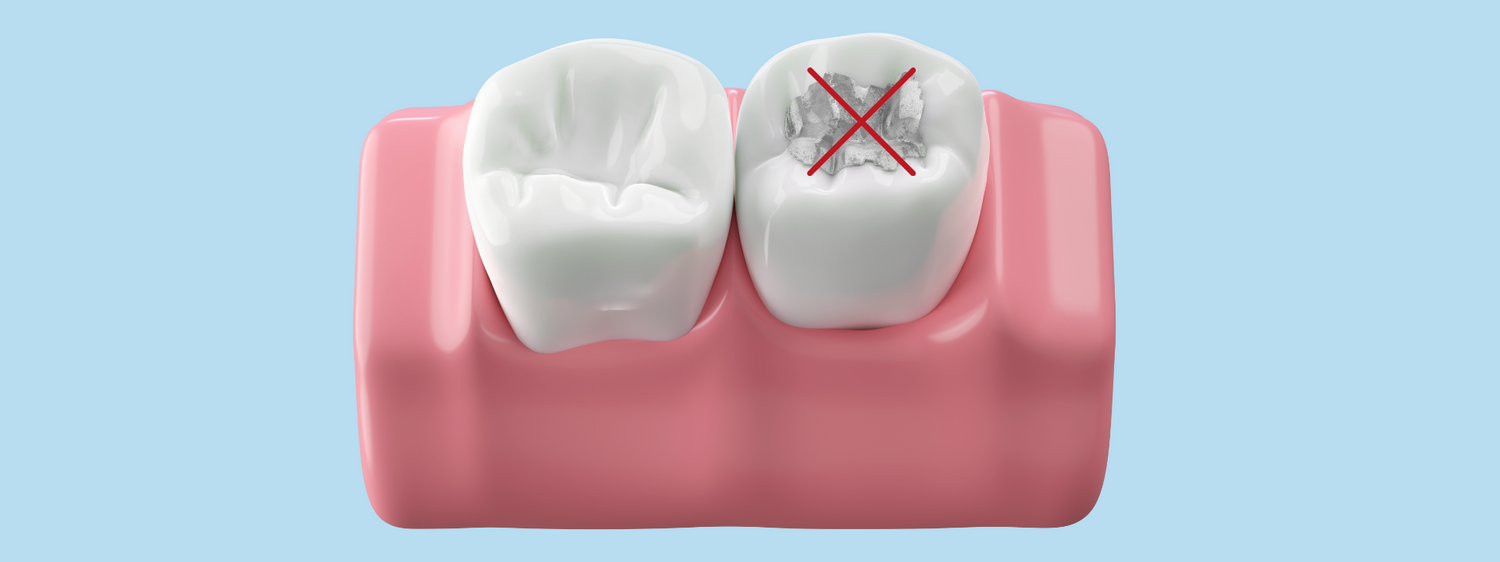
We've already reported on this: As of 2025, amalgam will finally disappear from dentistry. For decades, the silver-gray filling material was the standard solution for dental fillings – robust, durable, and above all, cost-effective. However, health concerns and environmental aspects have led to its definitive removal.
But what does this mean specifically for you as a patient? What alternatives are there that are both safe and aesthetic – and ideally come without additional costs? The good news: Modern dentistry already offers a variety of high-quality materials that can replace amalgam. However, not every option is automatically the best choice for your individual needs.
In this article, we will take a closer look at which filling materials are now an option, which costs health insurance companies cover, and what you should consider when choosing your new dental filling. Because your smile deserves only the best!
Review: Why will amalgam be definitively banned from 2025?
For decades, amalgam was a proven solution for dental fillings – stable, durable, and above all, cost-effective. But for just as long, there have been critical voices pointing to the potential risks of the material. The biggest point of contention: mercury – a highly toxic substance that can be released in small amounts from amalgam fillings.
While scientific studies have not yet provided clear evidence of health damage in healthy adults, amalgam was already banned years ago for pregnant women, children under 15, and people with kidney diseases. The reason: These groups are considered particularly sensitive to mercury exposure.
However, the real reason for the definitive ban lies not in the potential health hazard for patients, but in environmental protection.
Amalgam - A growing environmental problem
Every year, significant amounts of mercury are released into the environment by the removal of old amalgam fillings – whether through dental practices, wastewater, or landfills. Mercury is a heavy metal that accumulates in nature and can long-term endanger ecosystems and human health. The EU has therefore decided: The use of amalgam is no longer justifiable.
This ban, which we have already reported on, marks a new era in dentistry – more environmentally friendly, sustainable, and modern. But what does that mean for you? What alternatives are available to you, and which costs does the health insurance cover? We will explore precisely these questions in this article.