





Almost everyone experiences this unpleasant sensation at some point: while drinking a cold beverage, eating ice cream, or even breathing in cold air, a sudden sharp sensation shoots through a tooth. The discomfort often lasts only a few seconds but can be quite unpleasant. Many people then wonder whether a serious dental condition is causing it.
In fact, tooth sensitivity can have many different causes. It is not always the result of a cavity or significant damage to the tooth. Changes to the enamel, exposed tooth necks, or external stimuli are often responsible. Everyday habits can also contribute to increased tooth sensitivity.
The pulling sensation is usually a sign that certain parts of the tooth are reacting more strongly to external influences than they normally should. Understanding the possible causes is therefore worthwhile. Knowing the triggers often makes it possible to take targeted action and avoid further irritation.
In this article, we'll explain why teeth can suddenly become sensitive, the most common causes behind this sensation, and how to properly care for sensitive teeth.
Why do teeth suddenly become sensitive?
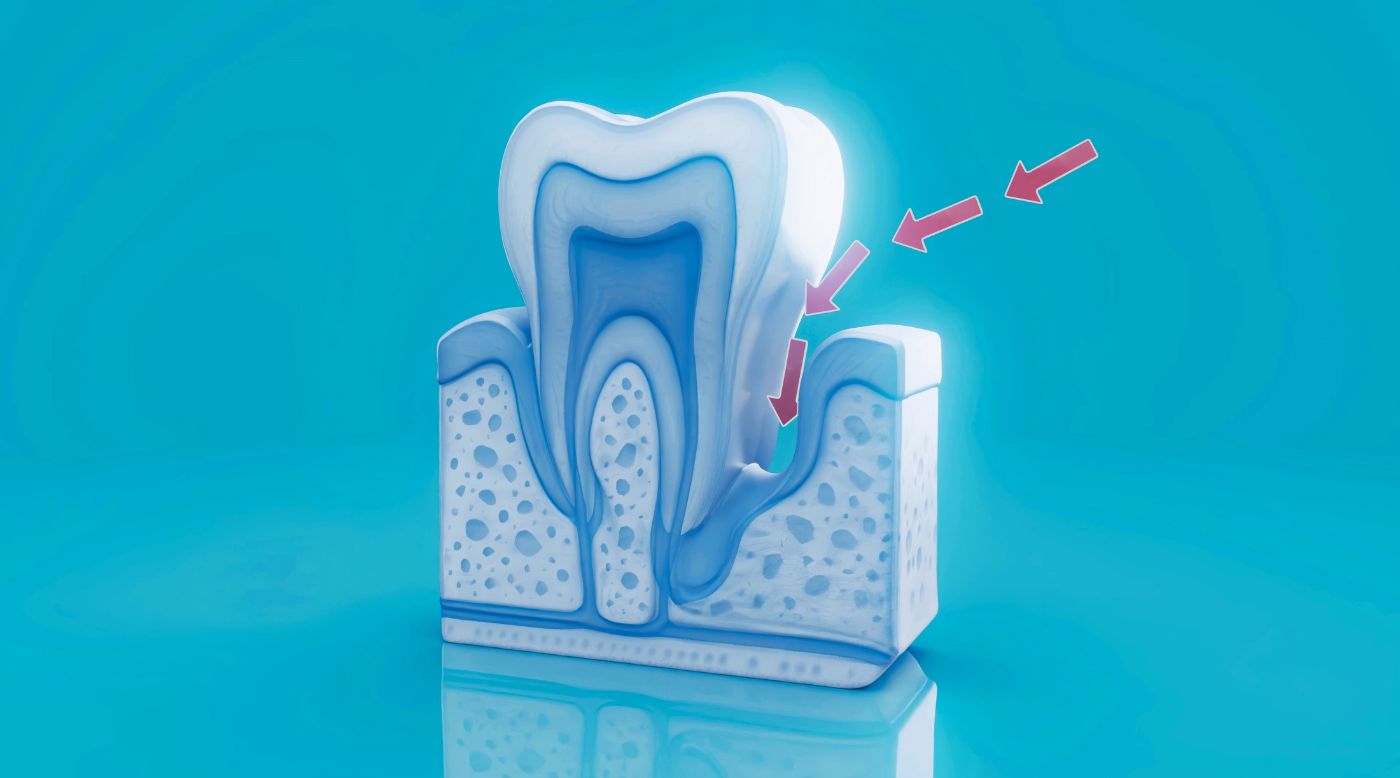
Our teeth have several protective mechanisms that shield the sensitive inner structures from external stimuli. The most important protective layer is the tooth enamel. It protects the underlying structures from temperature changes, acids, and mechanical stress.
However, when these protective structures become damaged or altered, external stimuli can more easily reach the deeper layers of the tooth. There, tiny tubules and nerve connections detect temperature changes and other influences. The characteristic brief, sharp sensation often results from this transmission of stimuli.
Many people initially notice the discomfort only occasionally. A cold drink, a sweet snack, or a cool breeze may be enough to trigger sensitivity. Over time, however, these reactions may occur more frequently if the underlying cause remains untreated.
The sensitivity does not always affect the entire tooth. Often, only certain areas become more reactive than others. This explains why some people notice the sensation only in one specific tooth or in one particular area of the mouth.
Tooth sensitivity itself is not a disease. Rather, it is a symptom indicating that sensitive tooth structures are reacting more strongly than usual to external stimuli.
What role do temperature changes and exposed tooth roots play?
Temperature changes are among the most common triggers of tooth sensitivity. Cold drinks, ice cream, hot foods, or cold air can all cause discomfort. Many people notice the sensation only in certain situations rather than continuously. This is because the discomfort usually occurs only when an external stimulus reaches sensitive areas of the tooth.
Exposed tooth roots play an important role in this process. Under normal circumstances, the gums protect the area where the crown meets the root of the tooth. However, when the gums recede, areas not protected by hard enamel become exposed. These regions are significantly more sensitive to temperature changes.
As a result, many people experience a brief, sharp sensation when drinking something cold or when cold air comes into contact with the affected tooth. The discomfort usually disappears once the stimulus is removed. Nevertheless, it indicates that sensitive tooth structures are under greater stress than intended.
Even minor changes to the enamel can increase tooth sensitivity. Although no visible damage may be present, the protective function of certain areas can already be reduced. As a result, external stimuli can penetrate deeper into the tooth and cause the characteristic pulling sensation.
The more frequently these symptoms occur, the more important it becomes to identify the underlying cause. Exposed tooth roots and sensitive tooth surfaces often develop gradually and may go unnoticed for a long time.
Can acids, diet, and brushing habits be responsible?
In addition to temperature changes, everyday habits can also affect tooth sensitivity. Acidic foods and beverages in particular can temporarily make tooth surfaces more vulnerable. These include fruit juices, soft drinks, lemon water, and certain sports drinks.
Acids do not usually cause immediately visible damage to the enamel, but they can temporarily weaken its protective function. Brushing your teeth immediately afterward can increase this stress. For this reason, many dental professionals recommend waiting a while before brushing after consuming highly acidic foods or drinks.
Daily brushing technique also plays an important role. Many people believe that applying more pressure results in cleaner teeth. In reality, brushing too hard over time can damage the gums and the exposed areas near the roots. This can create sensitive areas that later react to cold temperatures or sweet foods.
Frequent snacking can also reduce the natural recovery time of the teeth. Saliva needs time to neutralize acids and support the tooth surfaces. Constant exposure to new acidic or sugary foods can therefore contribute to increased sensitivity over time.
Tooth sensitivity is rarely caused by a single factor. In most cases, it develops gradually through the combined effects of various influences acting on the teeth over months or even years.
How should you care for sensitive teeth?
If your teeth frequently become sensitive, the main goal of your daily oral care routine should be to clean sensitive areas gently while effectively removing bacterial plaque. Many people instinctively avoid brushing painful areas. In the long run, however, this can allow plaque to accumulate more easily.
Gentle but thorough cleaning is much more important. Excessive pressure should be avoided. Tooth surfaces and the gumline can be cleaned effectively without aggressive scrubbing. This is particularly important if you have exposed tooth roots or already sensitive areas.
Many people compare sonic toothbrushes with ultrasonic toothbrushes in this context. Conventional sonic toothbrushes clean primarily through rapid mechanical brush movements. Ultrasonic toothbrushes, on the other hand, use ultrasonic technology and operate with significantly less mechanical movement on the tooth surface.
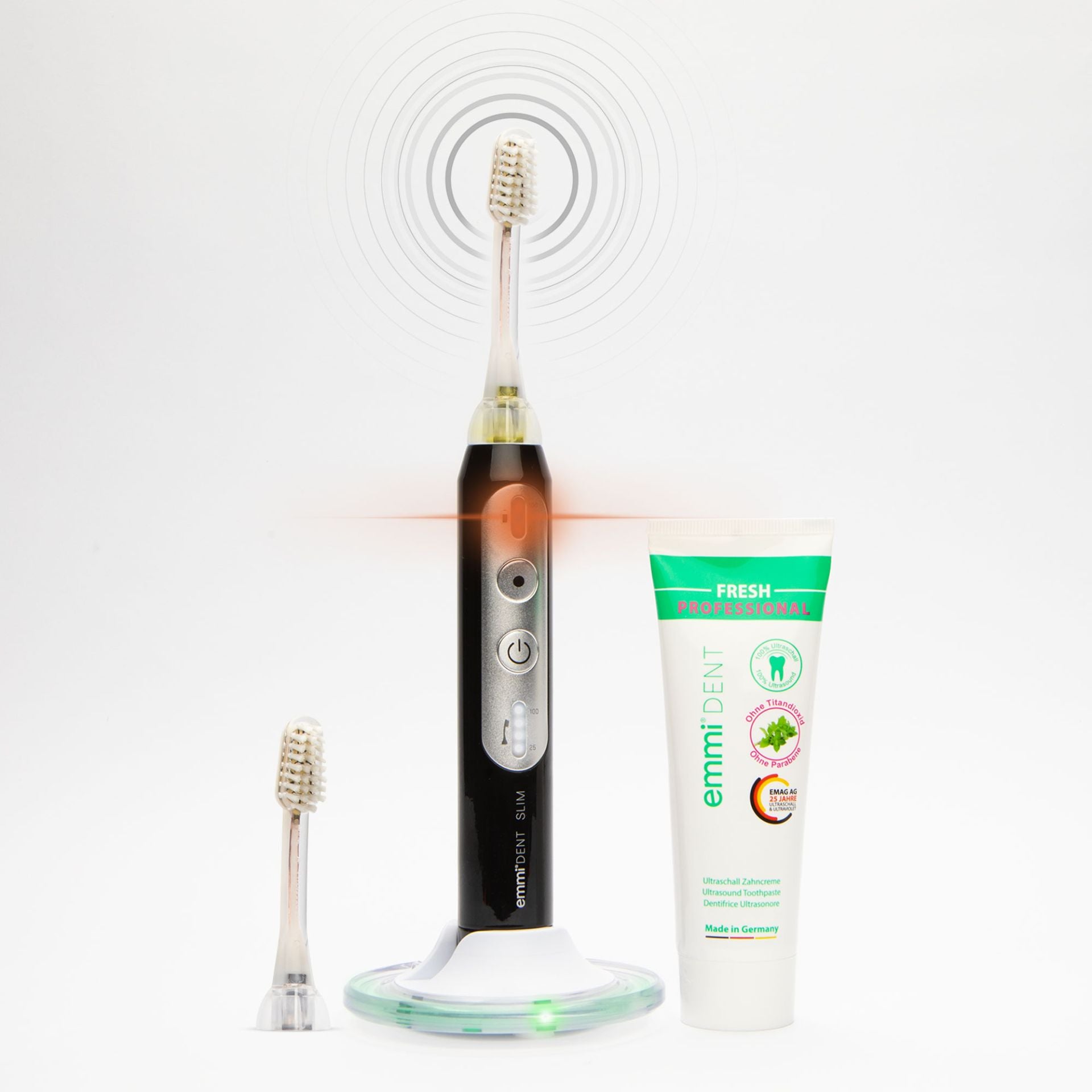
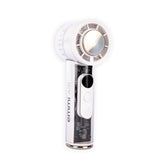
Our emmi-dent Slim Ultrasonic Toothbrush is used by many people as part of a gentle oral care routine for sensitive teeth. It may help reduce bacterial plaque and is often chosen by users who value particularly gentle daily cleaning. However, it is important to remember that no toothbrush can eliminate underlying causes such as exposed tooth roots, cavities, or other dental conditions.
In addition, a balanced diet, adequate hydration, and regular dental check-ups can help support the teeth's natural protective mechanisms over the long term.
When should you see a dentist?
Occasional sensitivity after drinking a very cold beverage or eating ice cream is not unusual. However, if the discomfort occurs regularly or becomes more intense over time, the underlying cause should be examined by a dental professional.
Sensitive teeth can indicate a variety of dental issues. Besides exposed tooth roots, possible causes include minor enamel defects, early tooth decay, leaking fillings, gum disease, or stress caused by teeth grinding. Many of these conditions cannot be identified with the naked eye.
You should pay particular attention if only one tooth is consistently affected, if the sensitivity persists for several weeks, or if pain occurs while chewing. Bleeding gums, swelling, or visible changes to the gum tissue should also be evaluated by a dentist.
Early examination helps identify the underlying cause accurately and can prevent further damage. The sooner changes are detected, the easier it is to take appropriate action.
Sensitive teeth are usually a sign that certain areas are reacting more strongly than normal to external stimuli. Exposed tooth roots, enamel wear, acidic foods, and everyday brushing habits are among the most common contributing factors. Understanding these possible causes and maintaining a gentle oral care routine can help support long-term dental health. If the discomfort persists or worsens, a dental examination can provide clarity and identify the actual cause.
```